
Tracking the Global Impact of Private Military Contractors in Today’s Headlines
News coverage of private military contractors often focuses on their complex role in global conflicts and security. This reporting navigates a landscape of high-stakes operations and intense scrutiny over accountability and international law. Staying informed requires parsing evolving narratives from both war zones and corporate boardrooms.
The Shifting Sands of PMC News Coverage
The evolving media portrayal of private military companies (PMCs) reflects a complex information ecosystem where geopolitical narratives often overshadow objective reporting. Initially framed as shadowy mercenaries, coverage has shifted toward framing them as legitimate security contractors, yet critical scrutiny of their accountability remains inconsistent. To navigate this, analysts must triangulate reports across international outlets and official documents, recognizing the inherent editorial bias in any single source. This discernment is crucial for separating operational fact from strategic perception management. Ultimately, understanding the motivations behind the framing—whether state-aligned or independently editorial—is key to a clear assessment.
From Niche Security to Front-Page Mercenaries
The media narrative surrounding Private Military Companies has undergone a profound transformation. Coverage has shifted from shadowy mercenaries to strategic security partners, often framed as essential actors in complex geopolitical landscapes. This evolution in private military contractor reporting reflects a broader normalization of their role, driven by sophisticated corporate public relations and state-level dependencies. For stakeholders, understanding this shifting media portrayal is critical for reputation management and strategic communication in a contested information environment.
The Wagner Group as a Case Study in Media Framing
The shifting sands of PMC news coverage reveal a media landscape in transition. Initial, often sensationalized reports have given way to more nuanced analysis, reflecting their complex role in modern conflict. This evolution in **private military contractor media narratives** is crucial for public understanding.
The discourse has matured from simplistic villainy to a necessary examination of global security’s blurred lines.
Outlets now grapple with themes of accountability, geopolitical leverage, and legal gray zones, moving beyond the headline-grabbing mercenary trope to scrutinize their foundational impact on state power and international law.
Geopolitical Events Driving Narrative Focus
The shifting sands of PMC news coverage reflect a complex evolution in media narrative. Initially framed through a narrow, militaristic lens, reporting has diversified to scrutinize legal accountability, geopolitical influence, and human rights impacts. This evolving private military contractor discourse now encompasses broader debates on sovereignty and the outsourcing of war, moving beyond simple tales of battlefield contractors to analyze their role in modern statecraft and global security architectures.
Dominant Frames and Narratives in Reporting
In the quiet hum of the newsroom, dominant frames and narratives take shape, acting as the invisible lenses through which complex events are filtered for the public. These recurring storylines, like “the heroic individual” or “the clash of civilizations,” provide quick understanding but can also subtly cement societal biases by deciding which voices are amplified and which facts become footnotes. Media framing thus quietly constructs our shared reality, one headline at a time. It is the architecture of our daily understanding, built brick by brick with each report. Recognizing these powerful dominant narratives is the first step toward a more nuanced and critical consumption of the stories we are told.
The “Shadow Army” and Lack of Accountability Frame
Dominant frames and narratives in reporting are the **unconscious lenses** through which media outlets consistently interpret events, shaping public perception. These established storytelling patterns, like “the horserace” in politics or “the disaster” in crises, prioritize certain facts and sources while marginalizing others. To achieve **critical media literacy**, one must actively deconstruct these frames by asking whose interests they serve and what alternative perspectives are silenced. This analytical approach is essential for **responsible news consumption** in a complex information landscape.
Cost-Effectiveness and Military Outsourcing Debate
Dominant frames and narratives in reporting are the unseen lenses through which news is filtered, shaping public perception by emphasizing certain aspects of a story while downplaying others. These established patterns, like framing an economic policy as either a “cost” or an “investment,” fundamentally guide audience understanding. Mastering **media analysis techniques** is crucial for recognizing these constructs.
The most powerful narrative is often the one the audience doesn’t realize it’s consuming.
By critically examining which voices and contexts are included or excluded, consumers can move beyond the initial frame to form more independent judgments.
Human Rights and Legal “Gray Zone” Focus
Dominant frames and narratives in reporting are the recurring perspectives and storylines that shape how news is presented and understood. These established patterns, such as framing an economic issue as a “crisis” or a conflict as a “clash of civilizations,” guide audience interpretation by emphasizing certain aspects while downplaying others. This process of **media agenda setting** significantly influences public perception, as consistent framing across outlets can solidify a particular viewpoint as the primary truth, often marginalizing alternative analyses. The power of these narratives lies in their ability to define problems, assign responsibility, and suggest solutions before a story is even fully consumed.
Challenges and Gaps in Journalistic Coverage
The landscape of journalistic coverage is increasingly fractured, facing profound challenges that create significant gaps in public understanding. Shrinking newsroom budgets and the relentless 24-hour news cycle often sacrifice depth for speed, while the complex digital ecosystem struggles with misinformation. This leaves critical stories in underserved communities or intricate policy realms underreported. The relentless chase for clicks can quietly eclipse the pursuit of context. Furthermore, securing public trust remains an uphill battle, creating a dangerous void where speculation flourishes. Addressing these critical information gaps is essential for a functioning democracy.
Opacity and Secrecy: The Difficulty of Verification
Current journalistic coverage faces significant challenges, including the erosion of local news deserts, which leaves communities uninformed on critical civic issues. The relentless 24-hour news cycle often prioritizes speed over depth, while economic pressures shrink investigative resources. Furthermore, achieving authentic diversity in newsrooms remains a persistent gap, limiting the range of perspectives and stories told. This landscape underscores a critical need for **sustainable journalism models** that can support rigorous, equitable, and trustworthy reporting essential for a functioning democracy.
Reliance on Government and Corporate Sources
Journalistic coverage today grapples with a critical **trust deficit in media**, fueled by the relentless pressure of the 24-hour news cycle. This drive for speed often sacrifices depth, leading to superficial reporting that fails to provide essential context. Furthermore, the decline of local news has created vast **information deserts**, leaving communities uninformed on crucial civic issues. Compounding this, complex stories about technology or climate change demand specialized expertise that many general newsrooms lack, resulting in coverage gaps. The result is a public often left with fragmented narratives instead of the nuanced understanding required for a healthy democracy.
Simplified Portrayals vs. Complex Corporate Structures
Current journalistic coverage faces significant challenges, including the relentless pressure of the 24-hour news cycle, which prioritizes speed over depth and amplifies misinformation. Shrinking newsroom budgets have decimated local reporting, creating critical **news deserts** and undermining democratic accountability. Furthermore, a pervasive lack of trust, fueled by perceived bias and opaque algorithms, erodes the essential connection between the public and a free press. Addressing these systemic gaps is fundamental for a functioning society.

The Role of Visual Media and Imagery
In the quiet corners of a classroom or the bustling scroll of a social feed, visual media acts as a universal translator for the English language. A single, powerful image can cement the meaning of a new word far faster than a dictionary definition, weaving narrative and emotion directly into vocabulary. This imagery provides essential context, turning abstract grammar into tangible stories. For learners and native speakers alike, this fusion is a cornerstone of modern language acquisition, making English not just a subject to study, but a vivid world to experience and share.
Iconography: The “Bearded Contractor” Trope
The role of visual media and imagery in the English language is fundamentally transformative, enhancing comprehension, retention, and global communication. Photographs, infographics, and videos provide immediate contextual clues that text alone cannot, bridging linguistic and cultural gaps. This synergy between visual and textual information is a cornerstone of modern digital literacy skills, essential for navigating contemporary media. As social media and online content dominate, the ability to critically interpret and create visual messages has become as important as verbal fluency.
Visual media often conveys complex narratives and abstract concepts more efficiently and universally than words alone.
Satellite Imagery and Open-Source Intelligence (OSINT)

The English language, once confined to parchment and print, now dances vividly across screens. Visual media and imagery have become its indispensable partners, transforming abstract words into concrete understanding. A photograph can convey “melancholy” faster than a definition; a film scene can teach colloquial dialogue more effectively than a textbook. This synergy between sight and syntax is crucial for **modern English language acquisition**, as learners decode meaning through context, gesture, and setting. Ultimately, every infographic, movie, and meme weaves a richer, more immersive tapestry for communication, proving that a picture doesn’t just illustrate a thousand words—it often teaches them.
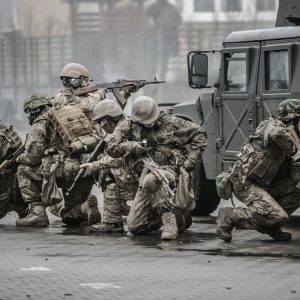
Absence of Imagery from Direct Combat Roles
The role of visual media and imagery in the English language is profoundly transformative, extending communication beyond textual boundaries. Photographs, infographics, and videos provide immediate context, clarify complex ideas, and anchor vocabulary in a shared visual experience. This synergy between sight and text accelerates comprehension and retention for learners and native speakers alike. Visual content marketing strategies leverage this power to convey brand narratives instantly. Ultimately, these elements have evolved English into a richly multimodal form of global discourse.

Regional and International Media Disparities
Regional and International Media Disparities highlight a significant imbalance in global information flow. While international media conglomerates possess vast resources and a dominant global reach, regional outlets often operate with constrained funding and limited technical infrastructure. This disparity affects the diversity of perspectives, as international narratives can overshadow vital local contexts and hyperlocal issues. Consequently, audiences may receive a homogenized worldview, while nuanced regional stories struggle for visibility on the world stage, impacting public understanding and cultural exchange.
US/UK vs. Russian Media Framing of PMCs

Regional and international media disparities create a stark imbalance in global information flow. Major Western news conglomerates often dominate the narrative, while regional outlets in the Global South may lack resources for comparable reach. This disparity shapes **global news coverage**, influencing which stories are amplified and which remain localized. *This power dynamic can inadvertently silence vital perspectives.* Consequently, audiences worldwide receive a filtered view of events, challenging the ideal of a truly interconnected and informed global public sphere.
Coverage in Conflict Zone Local Media
Regional and international media disparities create significant imbalances in global information flow. While major Western news conglomerates dominate, offering a Michael Moore Posts Julian Assange’s Bail broad but often homogenized perspective, regional outlets in the Global South may lack resources, limiting their reach and influence. This disparity affects which stories gain international traction and can marginalize crucial local viewpoints. Addressing this information asymmetry is vital for a more equitable media landscape. Achieving true global media representation requires supporting diverse journalistic ecosystems worldwide.
Variations in Terminology: Mercenaries vs. Contractors
Regional and international media disparities create a significant imbalance in global information flow. While major international outlets possess vast resources and reach, local media often struggle with funding and influence, leading to underreported stories and a homogenized global narrative. This disparity directly impacts **global news accessibility**, as critical regional perspectives are frequently marginalized. A truly informed public requires actively seeking out diverse local sources to counter this bias. Supporting independent regional journalism is therefore essential for a more equitable and comprehensive media landscape.

Impact of Coverage on Public Perception and Policy
Media coverage dramatically shapes public perception, acting as a powerful lens that focuses attention on specific issues while leaving others in the dark. This curated reality directly influences what the public deems important, creating a public agenda that policymakers feel compelled to address. Consequently, the intensity and framing of news stories can accelerate legislative action or bury critical debates. This dynamic creates a continuous feedback loop where coverage drives perception, perception demands policy, and policy, in turn, generates new cycles of coverage, fundamentally determining which societal challenges receive resources and resolution.
Influencing Public Opinion on Military Engagement
Media coverage significantly shapes public perception and drives policy agendas by highlighting specific issues. This media agenda-setting power determines which topics the public deems important, creating pressure for legislative action. *Emphasized or repeated news frames can solidify particular viewpoints in the public consciousness.* Consequently, the depth and tone of reporting directly influence which social problems receive political attention and resources, making media a key actor in the policy-making ecosystem.
Scandals as Catalysts for Legislative Attention
Media coverage powerfully shapes public perception and drives policy agendas. When stories dominate headlines, they create a **media-driven narrative** that can pressure lawmakers to act, often prioritizing visibility over nuanced solutions. This cycle influences what issues the public deems critical, directly impacting legislative timelines and resource allocation. Consequently, comprehensive and balanced reporting is essential for informed democratic discourse and effective governance.
Normalization of Privatized Force in Media Discourse
Media coverage significantly shapes public perception and drives policy agendas. Extensive reporting on an issue can elevate its perceived importance, creating a public opinion feedback loop that pressures officials to act. Conversely, limited coverage allows critical problems to remain overlooked. For effective advocacy, strategically frame your narrative to align with current media cycles, ensuring your issue gains the visibility necessary to compel legislative action and resource allocation.
Recent Blogs
-
Atefia Casino: Alles zum Einzahlen
Oct 28, 2026 -
Δυνατότητες Κινητής Εφαρμογής στο Atefia Casino
Oct 28, 2026 -
Izbira RTP iger na Atefia casino
Oct 28, 2026 -
Connection check aktkr3le
Oct 28, 2026